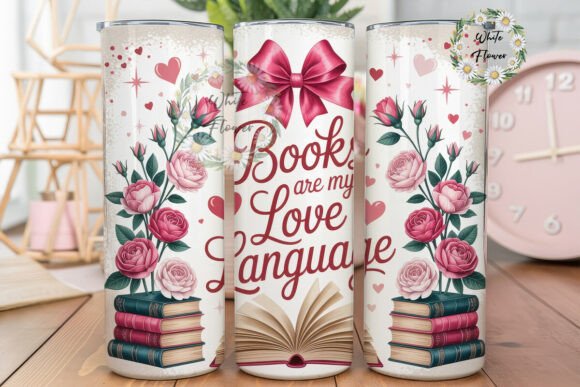
Review: Book Lover Floral Pink 20oz Tumbler Wrap
As a designer who spends more time staring at stitch simulations than most people care to admit, I approach every new digital embroidery file with a mix of excitement and skepticism. We have all been burned by beautiful previews that turn into thread nests on the hoop. So, when I got my hands on the Book Lover Floral Pink 20oz Tumbler Wrap, I didn't just look at the pretty pink florals; I looked at the potential headaches. This isn't just a graphic for a sublimation printer; for us, it represents a challenge in translating a high-resolution image into a tactile machine embroidery design that holds up under the needle.
First Impressions: Mood and Layout Potential
The first thing that strikes you about this design is its gentle, inviting mood. The combination of literary themes with soft floral elements creates a "cozy cottage" aesthetic that is incredibly popular right now. It feels like something you would find in a boutique bookstore or a handmade shop product display. The layout is substantial, requiring you to size the design to 9.3" x 8.2". That is a large footprint for embroidery. While the source files are provided as straight and tapered graphics for tumbler wrapping, adapting this for fabric requires careful consideration of scale.
The visual personality here is romantic but structured. For an Etsy seller or craft business owner, this hits a sweet spot. It appeals to readers, teachers, and anyone who loves a good book, making it a prime candidate for personalized gifts. However, because the original asset is a high-resolution graphic (300 DPI) rather than a pre-digitized stitch file, the burden of translation falls on you. You aren't just downloading a ready-to-stitch file; you are acquiring a master asset that needs to be converted into satin stitches, fill stitches, and running stitches suitable for your specific machine and fabric choice.
Real-World Application: From Screen to Stitch
Let's talk about where this actually works. I immediately envisioned this adapted for a heavy canvas tote bag design. Imagine a natural cotton tote with this floral book motif stitched in vibrant pinks and greens. The large size allows for detailed stitch density without overcrowding, provided your digitizing software handles the conversion well. It would also make a stunning statement on the back of a oversized sweatshirt. Sweatshirt embroidery requires a design that doesn't get lost in the fleece texture, and the bold lines of this graphic suggest it would stand out beautifully if digitized with appropriate underlay.
Another strong contender is home decor. A pillow cover or a kitchen towel featuring this motif could elevate a reading nook. Since the design is not seamless, you have to be strategic about placement. You cannot simply tile it across a blanket. Instead, it works best as a central focal point. For holiday embroidery projects, perhaps for a teacher appreciation gift during the holidays, this design screams "thoughtful." It moves beyond generic apples and pencils into something that shows you know the recipient's passions.
If you are running a small shop product line, consider using this for embroidered patches. The defined shapes of the books and flowers translate well to patch formats, which can then be ironed or sewn onto denim jackets or backpacks. This adds versatility to your inventory without requiring you to embroider directly onto difficult garments every time.
Technical Challenges and Fabric Considerations
Here is where we need to be realistic. Taking a 9.3" x 8.2" graphic and turning it into a stitch-out is not without risks. The primary concern is stitch density. If you auto-digitize this without adjusting settings, you might end up with a cardboard-like stiffness, especially on lighter fabrics. On thin fabric or stretchy material like a baby onesie, this design in its full size is likely too heavy. I would advise against using the full scale for baby embroidery unless you significantly reduce the size and simplify the internal details.
Textured fabrics present another hurdle. If you are stitching this on a waffle weave towel or a rough linen, fine details in the floral petals might get lost. You may need to increase the minimum stitch length or simplify small elements during the digitizing phase. Dark fabric is another consideration. The original graphic has a specific color palette. If you are stitching on black navy, you must ensure your thread colors provide enough contrast. A test run on scrap fabric identical to your final product is non-negotiable here.
Furthermore, curved surfaces like caps are tricky with a design of this magnitude. While the source includes a "tapered" file for tumblers, that tapering logic does not automatically apply to a baseball cap's front panel. Trying to force a 9-inch wide design onto a standard cap hoop will result in distortion. Stick to flat surfaces or large curved areas like the side of a tote bag where the fabric tension remains consistent.
Enhancing Brand Value and Customer Trust
Why go through the trouble of converting this graphic instead of buying a pre-made stitch file? Control. By starting with the high-res graphic, you control the finished product's quality. You decide the thread brands, the stitch types, and the backing. When a customer receives a handmade product that feels premium and durable, their trust in your brand grows. This design has the potential to look expensive if executed correctly. The clarity of the lines, when properly stitched, conveys professionalism.
For commercial embroidery projects, consistency is key. Once you have perfected the digitized version of this design, save it as a proprietary asset. Use it across your marketing materials, printable mockups, and social media previews. A cohesive look helps buyers recognize your work instantly. Whether it is for a wedding gift or a boutique branding item, the perceived value of a custom-digitized piece often exceeds that of a generic downloaded pattern.
Practical Notes for the Designer
Before you commit to stitching this on a client's garment, keep these practical steps in mind:
- Test First: Always stitch out on scrap fabric of the same weight and texture as your final project. Check for puckering.
- Check Contrast: View your digitized preview in black and white to ensure the design elements distinguish themselves without relying solely on color.
- Stabilizer Matters: For a design of this size and detail, use a high-quality cut-away stabilizer for knits and tear-away for stable wovens. Do not skimp here.
- Hoop Size: Confirm your machine can handle the dimensions. You may need to use a "hoop within a hoop" method or split the design if your maximum hoop size is smaller than 9.3" x 8.2".
- Licensing: Since this is sold as a graphic asset, verify the license terms regarding commercial use of the stitched output. Ensure you are allowed to sell finished items made from this design.
- Density Check: Manually review dense areas like flower centers. Reduce stitch count if necessary to prevent thread breaks and bird nesting.
In conclusion, the Book Lover Floral Pink 20oz Tumbler Wrap is a versatile and charming asset for the creative entrepreneur willing to put in the digitizing work. It bridges the gap between digital art and tactile craft. While it requires technical savvy to adapt from a tumbler graphic to a robust embroidery project, the payoff is a unique, high-value item that resonates deeply with book lovers everywhere. With the right preparation and attention to fabric mechanics, this design can become a staple in your portfolio of custom apparel and home goods.