Neon Dolphin 20 OZ Skinny Tumbler Wrap Review
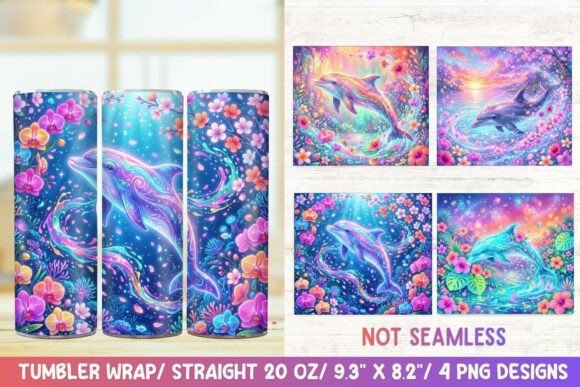
As a designer who spends most of my day staring at screens and managing design assets for various craft businesses, I approach every new file with a critical eye. When I first pulled up the Neon Dolphin 20 OZ Skinny Tumbler Wrap, my initial reaction was one of curiosity mixed with a bit of professional caution. The product description clearly states this is a sublimation graphic—a 9.3 x 8.2 inch PNG at 300 DPI—intended specifically for Tumbler Wraps. However, in our line of work, we often look at a vibrant graphic and immediately start imagining how it could translate into thread. Could this neon marine life motif work as a machine embroidery design for a custom apparel line or a boutique gift shop? Let's break down the visual potential and the practical realities of adapting this specific graphic for real-world stitching projects.
Visual Impact and Design Personality
The first thing that strikes you about this graphic is the energy. The "neon" aspect isn't just a label; the color palette screams vibrancy. In a sublimation context, these colors pop against a white or light-coated tumbler surface. For an embroiderer, this presents both an opportunity and a challenge. The mood is playful, modern, and slightly retro, fitting perfectly into current trends for summer collections, beach-themed events, or youthful personalized gifts.
The layout is designed to wrap around a curved surface, which means the composition likely has a flow that guides the eye horizontally. If you were to adapt this for a flat embroidery project, such as a tote bag or a sweatshirt chest pocket, you would need to consider how that horizontal flow translates. The dolphin shape itself appears dynamic, suggesting movement. In thread, this would require careful planning of stitch direction to maintain that sense of motion. A static fill stitch might kill the vibe, whereas a well-planned satin stitch border combined with varied fill angles could bring the dolphin to life on fabric.
From Screen to Stitch: A Real-World Scenario
Let's imagine a realistic scenario where a small shop owner wants to expand their offerings beyond sublimated tumblers. You have a client who loves the Neon Dolphin 20 OZ Skinny Tumbler Wrap aesthetic but wants a matching set of kitchen towels or a canvas apron for their beach house. Since this file is a PNG and not a vector or native embroidery file, you cannot simply load it into your machine. You would need to use digitizing software to trace the graphic and create the necessary stitch data.
In this scenario, the high resolution (300 DPI) is a massive advantage. It provides a crisp reference image for tracing. When digitizing for a tote bag design or a heavy cotton apron, you would want to replicate those neon hues using high-sheen rayon or polyester threads. The goal is to match the electric feel of the sublimation print. However, you must be realistic about thread limitations. Sublimation can achieve gradients and glows that thread simply cannot mimic without complex blending techniques. For a commercial product, simplicity often wins. I would recommend simplifying the neon glow effects into solid blocks of bright thread colors to ensure durability and washability.
Material Considerations and Fabric Texture
One of the biggest hurdles when translating a graphic like this to embroidery is the fabric. Sublimation works best on smooth, coated surfaces. Embroidery, however, interacts directly with fabric texture. If you attempt to stitch a detailed version of this dolphin onto a textured towel or a stretchy t-shirt, the results can vary wildly.
- Stretchy Fabrics: For baby embroidery on onesies or stretchy tees, the density of the stitches matters immensely. A dense fill stitch mimicking the solid parts of the dolphin could cause the fabric to pucker or distort. You would need to use a high-quality cutaway stabilizer and perhaps reduce the stitch density in your digitizing process.
- Dark Fabrics: The original graphic likely relies on a light background for the neon to pop. On dark navy or black fabric, you would need to incorporate an underlay or even a twill applique base to make the neon threads stand out. Without this, the design might look muddy.
- Curved Surfaces: While the original is for a skinny tumbler, applying this to a curved cap brim requires careful hoop placement. The horizontal wrap design might need to be broken up or centered differently to fit the limited hoop size of a cap frame.
Commercial Viability and Brand Consistency
For Etsy sellers and creative entrepreneurs, consistency is key. If you are selling both sublimated tumblers and embroidered goods, using the same visual theme across products strengthens your brand. The Neon Dolphin 20 OZ Skinny Tumbler Wrap offers a strong central motif that can become a signature for your summer collection. However, you must manage customer expectations.
A customer buying the tumbler expects a photo-realistic, gradient-heavy image. A customer buying the embroidered patch or sweatshirt expects the tactile quality of thread. If you market them as a matching set, ensure the embroidered version captures the *spirit* of the design without promising an identical replica. The value of the handmade product lies in the craftsmanship of the stitching, not just the image itself. High-quality satin borders and clean trim can elevate the perceived value of the finished item, making it a premium small shop product.
Practical Designer Notes for Adaptation
Before committing to a full production run or listing this as a new item in your store, there are several technical steps you should take. Remember, the file provided is a raster image (PNG), not a ready-to-stitch format.
- Digitizing is Mandatory: Do not attempt to print-and-stick this onto fabric as a substitute for embroidery unless you are doing a specific mixed-media technique. For pure embroidery, you must digitize the image or hire a digitizer.
- Test on Scrap: Always stitch out your digitized version on scrap fabric identical to your final product. Check how the neon thread colors interact with the material.
- Check Contrast: View your test stitch-out in black and white. If the details of the dolphin disappear in grayscale, your thread color contrast is too low, and you may need to adjust the shades.
- Licensing Check: This is crucial. The product note states it is intended for sublimation. Before using this graphic as a reference for a commercial embroidery file that you sell or use on goods for sale, review the license terms. Some graphic licenses allow for personal use only or restrict derivative works.
- Simplify Details: Tiny details that look great in a 300 DPI print may turn into bird nests of thread if they are too small for the needle. Be prepared to simplify tiny fins or splashes when creating the stitch path.
Final Verdict on Project Fit
The Neon Dolphin 20 OZ Skinny Tumbler Wrap is a fantastic source of inspiration for summer-themed merchandise. While it is natively a sublimation graphic, its bold shapes and energetic theme make it an excellent candidate for adaptation into custom apparel, patches, and home decor. It fits naturally into contexts requiring a fun, aquatic vibe—think pool parties, coastal boutiques, or vacation rentals.
However, success depends entirely on the execution of the embroidery process. It is not a plug-and-play solution for stitchers. It requires a thoughtful approach to digitizing, a solid understanding of how neon threads behave on different fabric textures, and a clear strategy for maintaining brand consistency between your printed and stitched goods. If you are willing to put in the technical work to translate this graphic into thread, the result can be a standout finished product that delights customers and expands your catalog beyond standard sublimation items. Just remember to respect the file's original intent and licensing while you innovate.