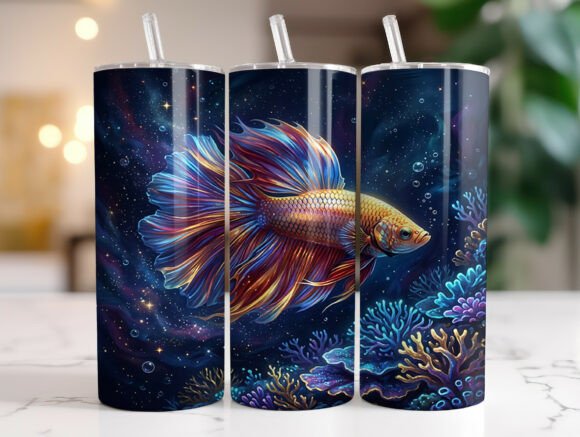
Betta Fish 20Oz Skinny Tumbler Wrap PNG Review
As a designer who spends more time staring at stitch maps than most people spend watching television, I approach every new digital embroidery file with a healthy dose of skepticism. We have all been there: you buy a design that looks vibrant on the screen, only to find out it is a nightmare of excessive jump stitches or density issues once it hits the hoop. Today, I am taking a close look at the Betta Fish 20Oz Skinny Tumbler Wrap PNG. While the product listing categorizes this under Tumbler Wraps and Graphics, my interest lies in how this specific visual asset translates into a tangible, stitched handmade product for real-world clients.
The first thing that strikes me about this file is its intended purpose. It is marketed specifically for sublimation or printing on 20oz skinny tumblers, featuring both straight and tapered versions to accommodate different cup shapes. However, in the world of custom apparel and boutique goods, a high-resolution image is often just the starting point for something much more textured. The mood here is undeniably aquatic and serene. Betta fish are known for their flowing fins and bold colors, and this design captures that elegance without becoming overly cluttered. For an embroidery project, this balance is crucial. A design that is too busy can turn into a bird's nest of thread, while one that is too simple might lack the "wow" factor customers expect from a personalized gift.
Translating Digital Graphics into Stitched Reality
Let us imagine a realistic scenario. You run a small shop selling custom nursery decor and boutique baby items. A customer approaches you wanting a unique theme for a baby shower, specifically asking for something aquatic but not the usual generic clownfish. This is where the Betta Fish 20Oz Skinny Tumbler Wrap PNG could shine, provided you treat it as a reference or a base for digitizing rather than a ready-to-stitch embroidery file. Since the download includes high-resolution PNGs at 300 DPI with dimensions of 9.3″ x 8.2″, the clarity is sufficient to trace or use as a underlay guide for creating a custom applique design.
If I were to execute this as a sweatshirt embroidery piece, I would lean heavily into texture. The flowing fins of a betta fish are perfect candidates for long satin stitch columns that mimic the movement of water. Alternatively, using a soft fill stitch with a slight gradient in thread colors could replicate the iridescent quality these fish are famous for. The layout of the original graphic is vertical, which naturally fits the sleeve of a hoodie, the leg of a pair of joggers, or the side panel of a tote bag design. It creates a sleek, elongated silhouette that is very on-trend for modern streetwear and casual custom apparel.
Practical Application and Fabric Considerations
When moving from a digital mockup to a physical finished product, fabric choice becomes the deciding factor in success or failure. If you are planning to use this motif on a structured item like a cap or a denim jacket, the 9.3-inch height gives you plenty of room to work with. However, caution is required when dealing with stretchy fabrics like jersey knits used in baby embroidery projects. The detailed edges of the fish fins, if stitched with high density, could cause the fabric to pucker or distort over time.
I always advise testing the design on scrap fabric first. If you are converting this PNG into stitches manually or via software, pay close attention to the stitch density. Areas with fine details, such as the gills or the delicate rays of the fins, need careful handling. On dark fabrics, you will need to ensure your underlay is robust enough to prevent the background color from showing through, which can muddy the vibrant blues and reds typical of betta fish. Conversely, on light fabrics, you must ensure that your pull compensation is set correctly so the design does not gap.
Another critical consideration is the hoop size. While the graphic is sized for a tumbler wrap, translating that full scale to embroidery might require a large hoop or even a multi-position stitch-out. For smaller applications, like an embroidered patch or a pocket detail on an apron, you would need to scale the image down significantly. When reducing the size, inspect small details closely. Tiny elements that look crisp at 9 inches might disappear or become indistinguishable blobs of thread at 3 inches. In those cases, simplifying the design by removing the smallest running stitch details might be necessary to maintain clarity.
Commercial Viability and Brand Consistency
For Etsy sellers and creative entrepreneurs, the value of a design lies not just in its beauty, but in its ability to build brand recognition. Using a cohesive visual theme across different products helps establish trust with buyers. If you specialize in aquatic themes, incorporating this betta fish motif into a line of holiday embroidery gifts, kitchen towels, or pillow covers can create a unified collection. The professional presentation of the source PNG suggests a level of quality that, when translated well into thread, reflects positively on your craft business.
However, we must address the licensing aspect seriously. The product description states this is an instant download of a graphic file intended for tumbler wrapping. It does not explicitly state the terms for commercial embroidery use or redistribution as a digitized pattern. Before selling any small shop product derived from this image, you must confirm the licensing terms with the creator. Using a graphic meant for sublimation as the basis for a commercial embroidery line without clearance can lead to intellectual property issues. Always verify whether the license allows for derivative works, especially if you plan to sell the digitized version itself as a design asset.
Final Thoughts on Execution
In conclusion, the Betta Fish 20Oz Skinny Tumbler Wrap PNG offers a strong visual foundation for a variety of creative projects, provided the user understands its limitations and potential. It is not a plug-and-play machine embroidery design out of the box, but rather a high-quality graphic resource for those willing to put in the digitization work or use it for applique templates. Its strength lies in its elegant composition and high resolution, which allow for flexibility in scaling and material application.
To get the best results, compare light and dark fabric backgrounds during your planning phase. Test your thread color contrast to ensure the fish pops against the material. Use proper stabilizer to support the weight of the stitching, especially if you are attempting to capture the flow of the fins with dense satin columns. Whether you are making a one-off personalized gift for a friend who loves aquariums or developing a new line of merchandise for your boutique, this graphic has the potential to result in a stunning, tactile piece of art. Just remember: the magic happens not in the download, but in how thoughtfully you translate those pixels into threads.