Review: Minimal White Marble Soft Vein Tumbler Design
As a designer who spends more time staring at stitch maps than most people spend on their phones, I approach every new embroidery file with a healthy dose of skepticism. We have all been there: you buy a stunning graphic online, load it up, and realize the density is all wrong for the fabric you intended to use. Today, I am breaking down the Minimal White Marble Soft Vein Tumbler. While the product listing categorizes this under Tumbler Wraps and Graphics, my job is to look past the sublimation specs and evaluate its potential as a core asset for a craft business or a high-end handmade product line.
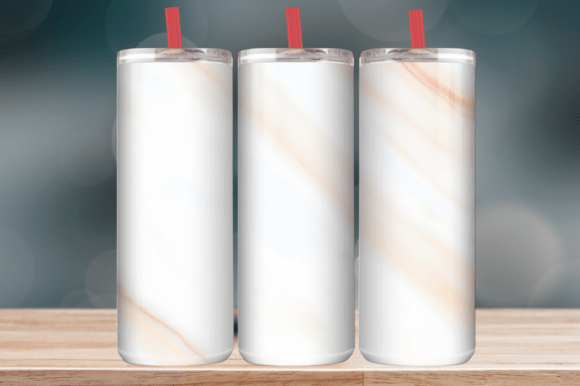
The first thing that strikes me about the Minimal White Marble Soft Vein Tumbler is its mood. It is not loud; it does not scream for attention with neon gradients or complex illustrative details. Instead, it offers a sophisticated, airy aesthetic defined by soft, organic veining against a clean white background. For an embroidery project, this visual personality is a double-edged sword that requires careful handling. The lack of heavy borders or dense blocks of color suggests a design that relies on texture and negative space. If you are planning to translate this into a machine embroidery design, you are looking at a project that demands precision in thread selection rather than reliance on heavy fill stitches to carry the weight of the image.
Real-World Application: The Boutique Tote Scenario
To truly test the viability of this design, I imagined a specific real-life scenario. A client approaches me for a set of reusable market totes for a local boutique that specializes in natural skincare and minimalist home goods. They want something that feels expensive but understated. This is where the Minimal White Marble Soft Vein Tumbler shines as a conceptual starting point.
In this context, we are not wrapping a tumbler; we are creating a tote bag design that mimics that same marble elegance. I would approach this as an applique design or a low-density fill project. Imagine using a high-sheen rayon thread in off-white or cream to replicate the "soft vein" effect on a heavy canvas or linen blend. The goal is to let the fabric texture show through, much like the transparency in the original graphic. For a small shop product like this, the perceived value comes from the subtlety of the stitch work. A customer running their hand over the bag should feel the slight elevation of the satin stitch outlining the veins, creating a tactile experience that matches the visual minimalism.
Navigating Fabric and Hoop Constraints
However, moving from a digital graphic to a physical finished product introduces constraints that do not exist in sublimation. The original file is listed as a high-resolution PNG, which is perfect for printing but tells us nothing about stitch count or underlay. If you are digitizing this yourself or commissioning a digitizer based on this graphic, you must be incredibly careful with stitch density.
Marble effects often rely on subtle gradations. In embroidery, trying to replicate soft gradients with thread can lead to bird-nesting or puckering if the stabilizer is not up to the task. On stretchy fabrics like a cotton jersey sweatshirt embroidery project, a dense attempt to capture every gray nuance of the marble vein could cause the fabric to warp permanently. I strongly advise testing the design on scrap fabric first. Specifically, test it on the exact material you plan to sell. If you are making baby embroidery items, the fabric will be delicate, and your stitch strategy must shift toward lighter running stitch outlines or sparse fill patterns to maintain softness against sensitive skin.
Furthermore, consider the hoop size. The graphic dimensions are roughly 9.3 by 8.2 inches. This is a large format. Not every home machine can handle a hoop this big in one go. You may need to split the design or scale it down significantly for smaller items like caps or patches. If you shrink a detailed marble pattern too much, those "soft veins" will merge into a muddy gray blob. Always inspect small details by viewing your digitized proof at 100% zoom before committing to the hoop.
Elevating Brand Consistency and Customer Trust
Why go through the trouble of adapting a sublimation graphic for embroidery? Because the handmade presentation of stitched goods carries a different weight in the marketplace. An Etsy seller offering a marble-patterned tote bag that is sublimated is selling a commodity. An seller offering the same visual theme executed in precise, textured embroidery is selling art. This distinction directly impacts customer trust and brand consistency.
When a buyer sees the Minimal White Marble Soft Vein Tumbler aesthetic translated into thread, it signals effort and quality. It suggests that the item is durable and meant to last, unlike printed vinyl or ink that might crack or fade. For commercial embroidery projects, this durability is a key selling point. Whether it is a holiday gift, a wedding favor, or a piece of custom apparel for a staff uniform, the embroidered version commands a higher price point. It enhances the giftability of the item, making it feel like a bespoke creation rather than a mass-produced good.
Critical Designer Notes for Execution
Before you list this as a printable mockup or start stitching for clients, there are practical steps you must take. First, verify the licensing. Just because a file is sold as a graphic does not automatically grant you the right to reproduce it as a digital embroidery file for resale. Confirm whether you are allowed to create derivative works or if the license is strictly for personal use or finished physical goods.
Second, pay attention to thread colors. Do not rely solely on standard white. To capture the "soft vein" look, you will likely need a palette of three or four shades: a bright white for highlights, a creamy ivory for the base, and perhaps a very light cool gray or silver for the deepest parts of the vein. Test these combinations in black and white mockups first to ensure the contrast reads well without color distraction.
Finally, consider the end-user experience. If this design is going onto a kitchen towel or an apron, it will face frequent washing. Ensure your backing and topping choices prevent the stitches from sinking into the pile of the fabric over time. For curved surfaces like caps, the large surface area of this specific design might need to be reworked entirely to fit the panel constraints without distortion.
In conclusion, the Minimal White Marble Soft Vein Tumbler is a visually striking asset that, with the right technical approach, can transcend its original category. It is not just a wrap for a cup; it is a mood board for a collection of sophisticated, textured goods. By respecting the limitations of the medium and focusing on high-quality execution, you can turn this graphic into a standout design asset that elevates your entire portfolio.