Floral Butterfly Watercolor Tumbler Wrap Review
As a designer who spends most of my day staring at digitized files and testing them on various fabrics, I approach new assets with a healthy dose of skepticism. We have all seen beautiful digital embroidery file previews that turn into a mess of thread breaks and puckering once they hit the machine. So, when I first encountered the Floral Butterfly Watercolor Tumbler Wrap, my initial reaction was to look past the vibrant marketing images and ask the hard questions: How does this translate from a high-resolution PNG to actual stitching? Is it viable for a craft business, or is it just another pretty picture?
The product description notes that this is an instant download containing one straight PNG and one tapered PNG, both at 300 DPI with dimensions of 9.3″ x 8.2″. While these specs are explicitly marketed for 20oz skinny tumblers under the category of Tumbler Wraps, my mind immediately went to textile applications. In the world of Graphics, a watercolor aesthetic implies soft edges, blending colors, and a lack of hard outlines. Translating that "wet-on-wet" look into thread is notoriously difficult. It requires a sophisticated understanding of stitch density, fill stitch direction, and color transitions to avoid looking blocky or overly dense.
Visual Personality and First Impressions
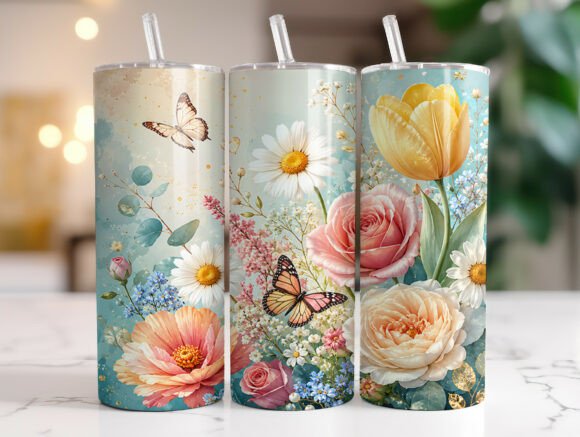
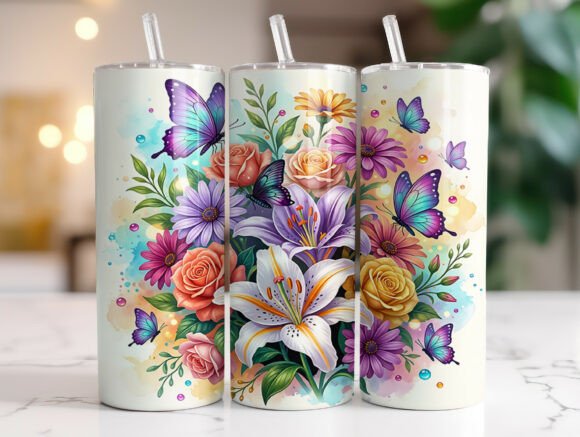
The mood of the Floral Butterfly Watercolor Tumbler Wrap is undeniably whimsical and organic. Unlike rigid geometric patterns or traditional folk art motifs, this design leans into a softer, more painterly vibe. For an embroidery project, this suggests a need for careful thread selection. If you were to recreate this using standard catalog numbers without testing, you might lose the subtle gradients that define the watercolor style. The layout features a butterfly surrounded by floral elements, which naturally draws the eye to the center. This makes it an excellent candidate for focal points on larger items like a tote bag design or the back of a sweatshirt embroidery project.
However, because the source file is a PNG intended for sublimation or printing, using this as a reference for a machine embroidery design means you are essentially treating it as a complex photo-realistic challenge. You aren't just following a pre-made stitch file; you are interpreting a graphic. This distinction is crucial for Etsy sellers and small shop product creators who need to manage customer expectations. The visual appeal is high, offering a boutique feel that elevates a standard handmade product into something that feels curated and artistic.
Real-World Application: The Custom Boutique Scenario
Let's imagine a realistic scenario where you are preparing a custom order for a local boutique. They want a line of spring-themed aprons and kitchen towels featuring nature motifs. The Floral Butterfly Watercolor Tumbler Wrap fits the theme perfectly. However, applying a 9.3″ x 8.2″ design to an apron bib requires strategic thinking. You cannot simply hoop the entire area if your machine has a smaller maximum hoop size. You would need to consider splitting the design or scaling it down, which brings us to the issue of detail retention.
In this context, the watercolor effect becomes a double-edged sword. On a sturdy cotton twill apron, you have the stability to support a denser stitch count, allowing you to mimic the color blends of the original PNG. But if you attempt this on a thin linen tea towel or a stretchy baby onesie for baby embroidery, the fabric may not support the necessary stabilizer weight required to keep those soft edges crisp. A real-life test on scrap fabric is non-negotiable here. I would advise running a test stitch-out on the exact fabric intended for the final finished product to see how the thread colors interact with the material texture.
Navigating Technical Challenges
One of the biggest hurdles with watercolor-style graphics in embroidery is avoiding the "paint-by-numbers" look. If the digitization (or your manual recreation based on this graphic) relies too heavily on large blocks of fill stitch without enough variation in angle or density, the butterfly wings can look flat and heavy. Conversely, if you rely too much on running stitch to capture the delicate details, the design may lack coverage and durability, especially for items that will be washed frequently.
There are specific situations where the Floral Butterfly Watercolor Tumbler Wrap should be used with extreme caution. For instance, curved surfaces like caps are problematic for large, detailed graphics unless they are specifically digitized for that curvature. While the tapered PNG included in the file helps with tumbler application, translating that taper to a cap crown requires significant adjustment. Similarly, dark fabrics present a challenge. Watercolor designs often rely on the white of the background to create highlights. On a black sweatshirt, you would need to incorporate an underlay or a white base layer to prevent the dark fabric from muting the pastel tones of the flowers and butterfly.
Furthermore, tiny details in the floral petals or the butterfly antennae might get lost if the design is scaled down for a small pocket logo or an embroidered patch. Before committing to a production run, inspect the small details closely. Zoom in on the PNG to see where the color transitions happen and decide if those areas can be realistically stitched with the thread weights you have available.
Enhancing Brand Value and Customer Trust
For creative entrepreneurs and apparel decorators, the choice of design directly impacts brand perception. Using a high-quality, cohesive graphic like the Floral Butterfly Watercolor Tumbler Wrap signals professionalism. It shows that you care about aesthetics and trends, not just churning out generic items. When a customer receives a personalized gift or a piece of custom apparel that features such a nuanced design, it builds trust. They perceive higher value, which justifies a higher price point for your commercial embroidery services.
This design also works exceptionally well for printable mockup creation. Even before you stitch a single thread, you can use the high-resolution PNG to create compelling social media posts or Etsy listings to gauge interest. This allows you to validate the market demand for this specific aesthetic before investing time in digitizing or stitching. It serves as a versatile asset for both physical goods and digital previews.
Practical Notes for the Studio
If you decide to move forward with this design for your next embroidery project, keep these practical steps in mind:
- Test First: Always stitch a sample on scrap fabric of the same weight and weave as your final material.
- Check Contrast: Ensure your chosen thread colors provide enough contrast against the fabric, especially for the lighter watercolor sections.
- Stabilizer Matters: Use a cut-away stabilizer for stretchy fabrics and tear-away for stable wovens to support the design's integrity.
- Review Density: If you are digitizing this yourself based on the PNG, pay close attention to stitch density to prevent puckering.
- Verify Licensing: Since this is a digital download, confirm the license terms regarding commercial use before selling finished items or modified versions.
- Hoop Confirmation: Ensure your equipment can handle the 9.3″ width or plan for a multi-hoop strategy if scaling up.
In conclusion, the Floral Butterfly Watercolor Tumbler Wrap offers a beautiful, trend-forward aesthetic that can elevate a variety of projects from holiday gifts to boutique merchandise. While it originates as a graphic for tumblers, its potential in the embroidery world is significant for those willing to put in the technical legwork. By respecting the limitations of thread and fabric, and by approaching the design with a critical, experienced eye, you can transform this digital asset into a stunning tangible product that resonates with customers.