Coffee Cup Croissant Cake and Teapot: A Designer's Review
As a designer who spends more time staring at stitch simulations than I do sleeping, I am always cautious about new Illustrations entering my workflow. When I first opened the Coffee Cup Croissant Cake and Teapot collection, my immediate reaction was one of relief. Finally, a set of Graphics that understands the limitations and beauties of thread. This isn't just a bundle of clipart converted into vectors; it feels like a curated selection of machine embroidery design assets built for real-world application. Whether you are an Etsy seller looking to expand your café-themed lineup or a hobbyist making gifts for friends, this collection offers a distinct visual personality that translates beautifully from screen to fabric.
The Aesthetic: Minimalist Charm with Stitching Intent
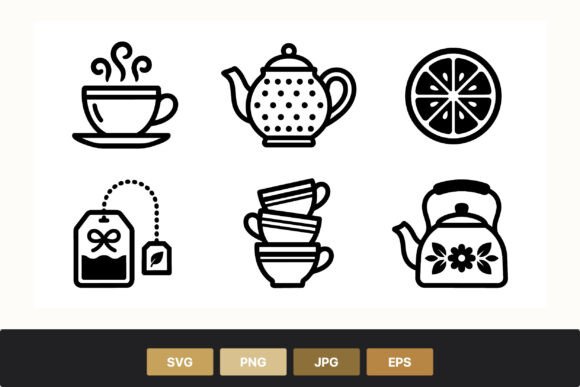
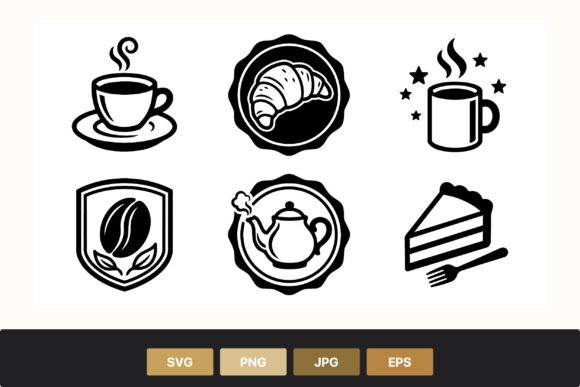
The first thing that strikes me about Coffee Cup Croissant Cake and Teapot is its cohesive mood. The six black and white icons—a steaming coffee cup on a saucer, a croissant inside a round badge, a steaming mug with stars, a coffee bean shield emblem, a steaming teapot in a circular frame, and a slice of cake—share a clean, modern line quality. For us as embroiderers, "black and white" in the preview often hints at high contrast, which is crucial for readability. These designs avoid the trap of being too busy. They rely on strong outlines and clear shapes, suggesting a smart use of running stitch for details and fill stitch for the bolder elements like the croissant or the coffee bean.
The layout of each icon feels deliberate. The circular frames around the croissant and teapot are particularly clever. In embroidery, circular borders act as natural containment fields for stitch density, preventing the design from spreading or distorting on stretchy fabrics. This suggests the creator understood that these aren't just digital images; they are blueprints for thread. The "steaming" effects on the cups and teapot are stylized enough to look cute without requiring thousands of tiny stitches that might break or bird-nest during production.
Real-World Application: From Mockup to Finished Product
To truly evaluate Coffee Cup Croissant Cake and Teapot, I imagined a specific project: a custom order for a local bakery needing branded custom apparel and tote bags. This is where the rubber meets the road. If I were stitching the "steaming mug with stars" onto a canvas tote bag design, the bold lines would stand up perfectly against the textured weave of the fabric. The simplicity of the icon ensures that even from a distance, a customer walking past a craft fair booth would instantly recognize the coffee theme.
For sweatshirt embroidery, the shield emblem featuring the coffee bean is a standout. Shield shapes provide a structured look that works well on the chest of a hoodie or crewneck. Because the design is contained, it minimizes the risk of puckering, a common nightmare when working with fleece or French terry cloth. I can easily see this becoming a bestseller for small shop product lines targeting remote workers or students who love their morning brew. The "slice" icon, likely a cake or pie wedge, pairs wonderfully with the teapot for a "tea time" themed personalized gift set, perhaps stitched onto a pair of kitchen towels or an apron.
The versatility extends to smaller items as well. The round badge style of the croissant is practically made for an embroidered patch. If you are selling digital products or physical patches, this specific icon has the symmetry and balance required for a professional-looking accessory that can be ironed or sewn onto hats and jackets. It elevates a basic garment into a piece of boutique branding.
Navigating Fabric Challenges and Hoop Limitations
While Coffee Cup Croissant Cake and Teapot is robust, no design is immune to the physics of embroidery. Here is where your experience as a maker comes into play. If you plan to use these on dark fabric, remember that these are described as black and white icons. You will need to carefully select your thread colors to ensure the "white" elements pop against a navy or black background. A cream or light gold thread might offer a softer, more premium look than stark white, depending on your brand aesthetic.
Caution is advised when working with very small hoop size constraints. While the icons are simple, the "stars" on the mug or the intricate steam lines could lose definition if scaled down too aggressively for a tiny pocket logo. Always test the design on scrap fabric first. This is non-negotiable. Check how the stabilizer interacts with your chosen material. For stretchy fabrics like jersey knits used in baby embroidery projects, a cut-away stabilizer is essential to maintain the shape of the circular frames over time and multiple washes.
Textured fabrics, such as linen or waffle weave, can sometimes swallow fine details. The running stitches defining the saucer or the teapot spout might sink into deep weaves. In these cases, consider adding a topping or water-soluble film to keep the stitches floating on top of the fabric texture. Also, be mindful of curved surfaces like caps. The circular designs (the badge and the teapot frame) are generally cap-friendly, but ensure your digitizing software or the file itself hasn't created overly dense areas at the edges that could cause the cap brim to warp.
Commercial Value and Brand Consistency
For commercial embroidery professionals and creative entrepreneurs, consistency is key to building trust. The Coffee Cup Croissant Cake and Teapot set offers a unified visual language. Using all six icons across different products—mugs, shirts, bags—creates a cohesive collection that looks professionally curated rather than haphazardly assembled. This level of polish increases the perceived value of your handmade product.
When customers see clean, crisp stitching with no loose threads or distorted shapes, their confidence in your brand grows. These designs support that perception. They are not overly complex, which reduces the margin for error during production, leading to fewer rejects and higher profit margins. For digital embroidery file sellers, offering a preview of these stitched out on various backgrounds in your printable mockup listings will show buyers exactly what to expect, reducing hesitation and boosting sales.
Final Verdict and Practical Notes
In conclusion, Coffee Cup Croissant Cake and Teapot is a practical, high-utility addition to any designer's library. It bridges the gap between trendy illustration and functional embroidery art. Before you start stitching, however, keep these final checks in mind:
- Verify Licensing: Always confirm the license terms before selling finished items or digital products derived from these files.
- Check File Formats: Ensure the embroidery file formats provided match your specific machine brand (PES, DST, JEF, etc.).
- Test Density: Run a test stitch-out to see if the fill areas are too dense for your preferred thread weight.
- Contrast Check: Preview the design in both light and dark modes to plan your thread palette effectively.
- Detail Inspection: Zoom in on the "stars" and "steam" details to ensure they won't collapse at your intended size.
If you approach Coffee Cup Croissant Cake and Teapot with the same care you would any professional applique design or complex motif, you will find it to be a reliable workhorse for your next embroidery project. It respects the medium of thread while delivering the charming aesthetic modern consumers crave.